
Community First Choice (CFC) Benefit
Virtual Caregiving
A real person checking in, for the moments that call for it.
Virtual Caregiving is one of the ways Caregivers First Choice delivers Remote Supports, a Community First Choice (CFC) benefit fully covered by Health First Colorado. Some members want a familiar voice checking in during a specific part of their day, a morning routine, a window while family is out. A live Remote Care Coordinator (RCC), reachable by phone, tablet, or computer, is built around exactly that.
What is Virtual Caregiving
Picture the time a live-in caregiver has to step out, picking up the kids from school, running an errand. A Remote Care Coordinator checks in and stays with your loved one for that specific stretch, so they have company, and the family gets an hour that's actually theirs.
Your loved one gets to know one dedicated Remote Care Coordinator, not a rotating call center, backed by nurses, physicians, and pharmacists when needed. Together with your family, we build the plan around what they actually want out of their day, tied to real routines and real moments, not a generic script.
- Proactive check-ins by phone, tablet, or computer, scheduled or as-needed
- Medication and appointment reminders
- Daily wellness surveys as needed, so patterns get noticed before they become emergencies
- Help coordinating medication, food, transport, and other household needs
- Remote social activities multiple times a week, real engagement, not just a check on a box
- Companionship, for the hours that are just as much about connection as safety
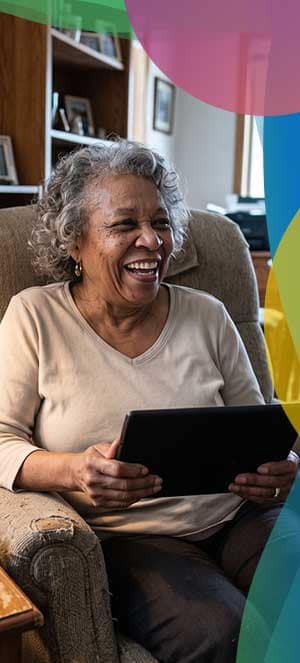
This isn't an app that pings you. It's a person who knows your loved one's routine and notices when something's off.
Who This Is For
Families with a specific, predictable window where no one's around, a caregiver's errand, a school pickup, a morning routine someone wants help with but doesn't need hands-on care for. Families managing a loved one with a chronic condition who'd benefit from more regular check-ins. Families where a live-in or family caregiver is stretched thin and could use a second set of eyes for the moments that matter most. Families where isolation itself has become a health risk, not just a loneliness problem

How It Fits With Your Care Team
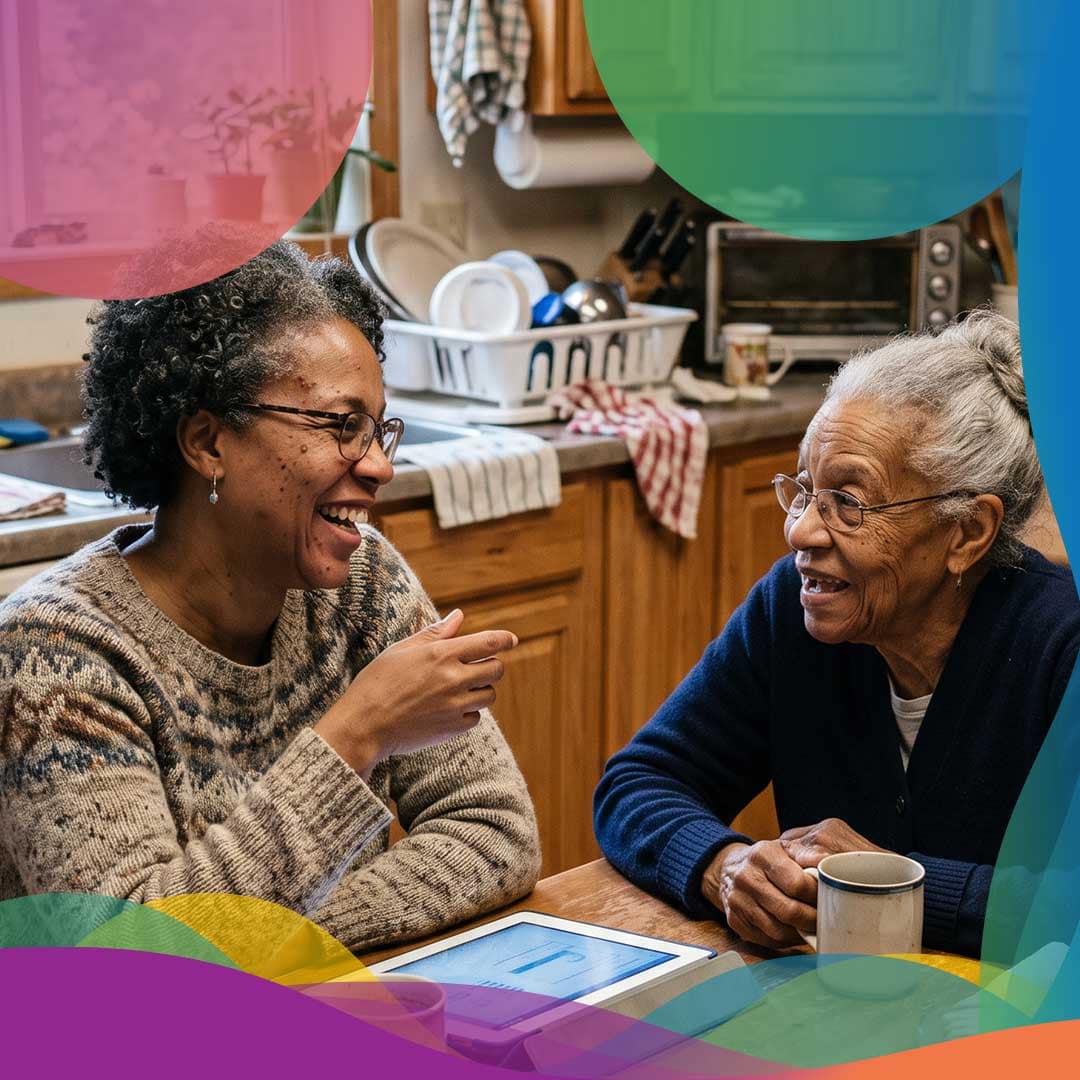
If a Remote Care Coordinator notices something during a check-in, your loved one's own care team and family hear about it too, the same day, not buried in an app nobody opens.
Covered Under Community First Choice (CFC)
Virtual Caregiving is delivered as part of the Remote Supports benefit under Community First Choice (CFC). If you qualify, there's no cost to you. See full eligibility and coverage details on our Remote Supports page
Honest Answers
Is this a video call app I have to figure out?
No. Your Remote Care Coordinator works with whatever device you already have, and we help set it up.
What if my loved one doesn't want to talk to a stranger every day?
The Coordinator assigned to you stays consistent. It's not a rotating call center. Over time, it becomes a familiar voice, not a stranger's.
Does this replace the backup support person Community First Choice (CFC) requires?
No. Virtual Caregiving is itself part of how Remote Supports is delivered, so it can't count as its own backup. HCPF requires a separate backup support person, unpaid family, a friend, or someone paid by an agency provider, who can respond if there's an emergency or if the Remote Supports technology stops working. That person has to be someone other than your Remote Care Coordinator. Talk to us about who that could be for your plan.
Our family caregiver is stretched thin. Is this for us?
Often, yes, but not because it adds more coverage. It's because your loved one has someone consistent checking in on a part of their day that matters to them, and that tends to be exactly the moment a caregiver needed a real break to happen.
Fall Alert Safety Technology
Wall-mounted sensors, not cameras, not a wearable pendant to remember, detect falls and flag unusual activity in real time. A live team reviews every alert.
Vital Monitoring
Continuous awareness of daily patterns, sleep, meals, bathroom use, activity, day and night, so changes get caught before they become emergencies.