
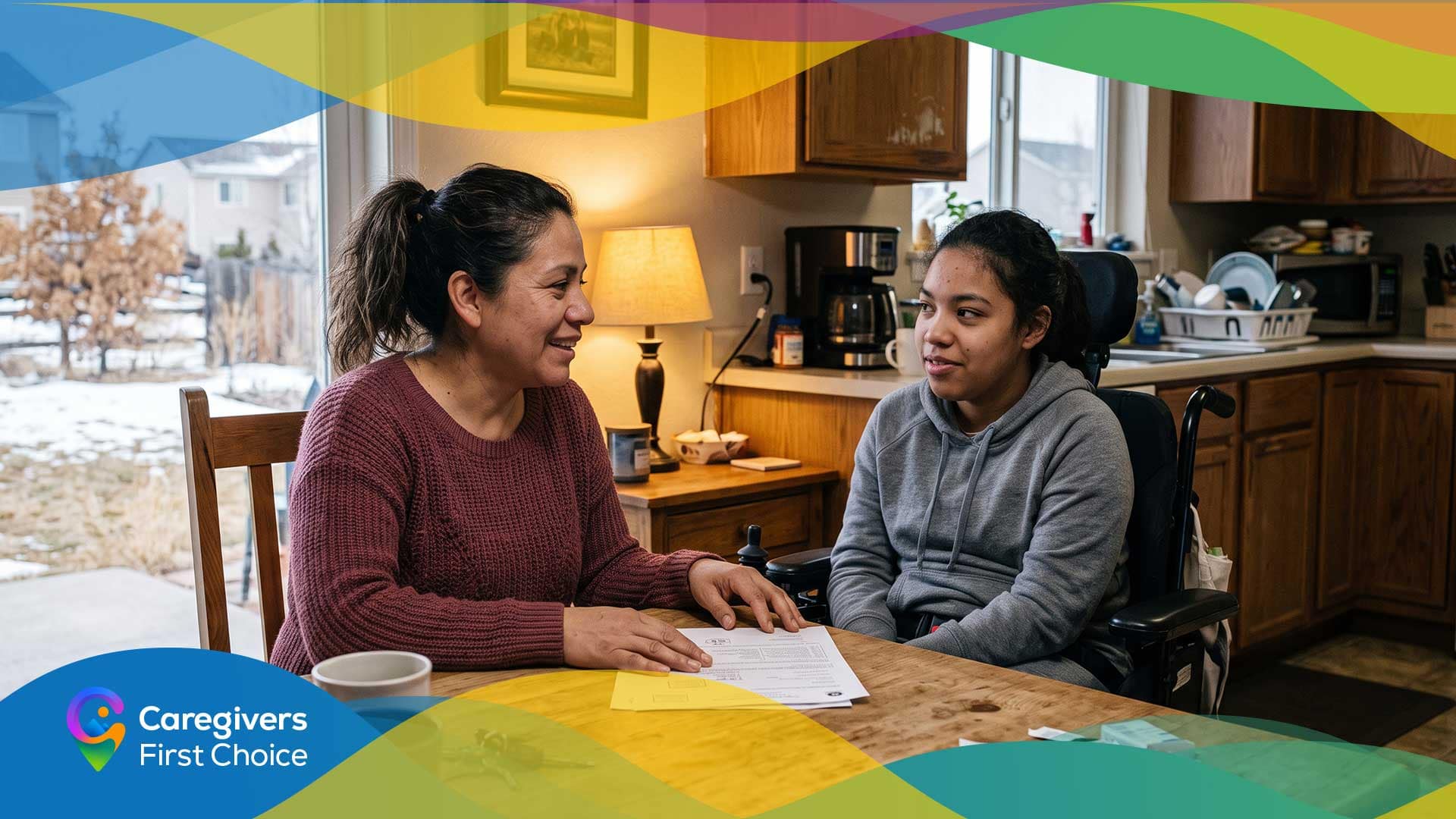
Consider a person in a rural Colorado county, far from the nearest home care agency, who qualifies for Medicaid long-term care. The state assesses the need and authorizes more weekly hours of help than any single caregiver is allowed to be paid for. One person provides that care, a family member, because there is no one else willing to do it and no one else the person would accept in their home. A new rule, approved this June and now phasing in, will tell that caregiver that past a set weekly number, the care they already provide, hours the state itself agrees are needed, can no longer be paid. There is no second caregiver waiting to take the remaining hours. There is only the cap, and the gap it leaves behind.
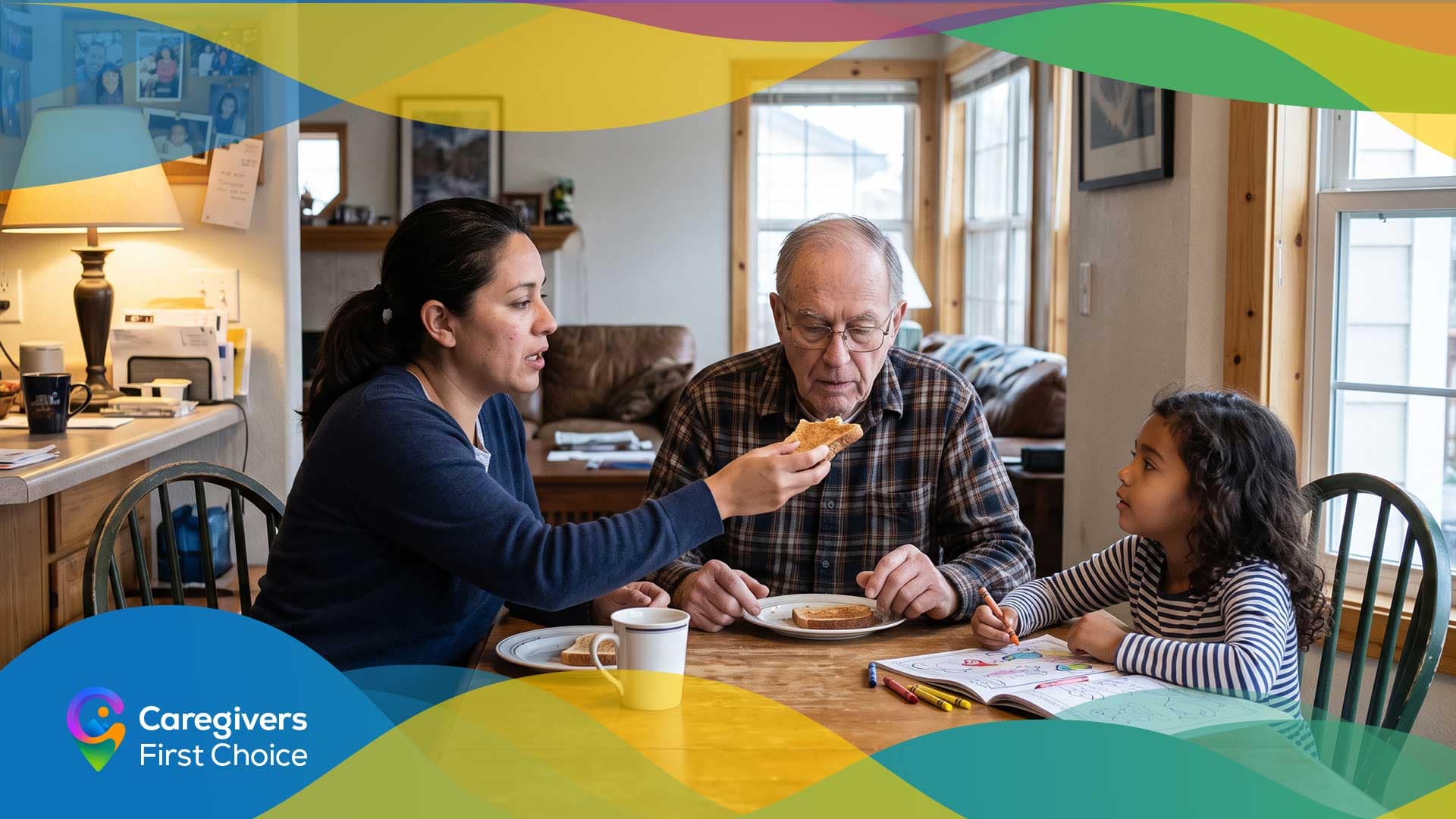
This is not a rare arrangement. It is the predictable shape of care in rural counties, in homes where the assessed need runs past what one caregiver may be paid for, and in any situation where the trusted caregiver and the family member are the same person.
There is a subtle irony here. The program that lets that caregiver be paid at all exists because of a civil rights movement. The rule that caps her exists because of a budget worksheet. Somewhere along the way, the language of the policy debate shifted from autonomy to burnout, and the original promise got harder to hear in the noise.
Where consumer direction came from
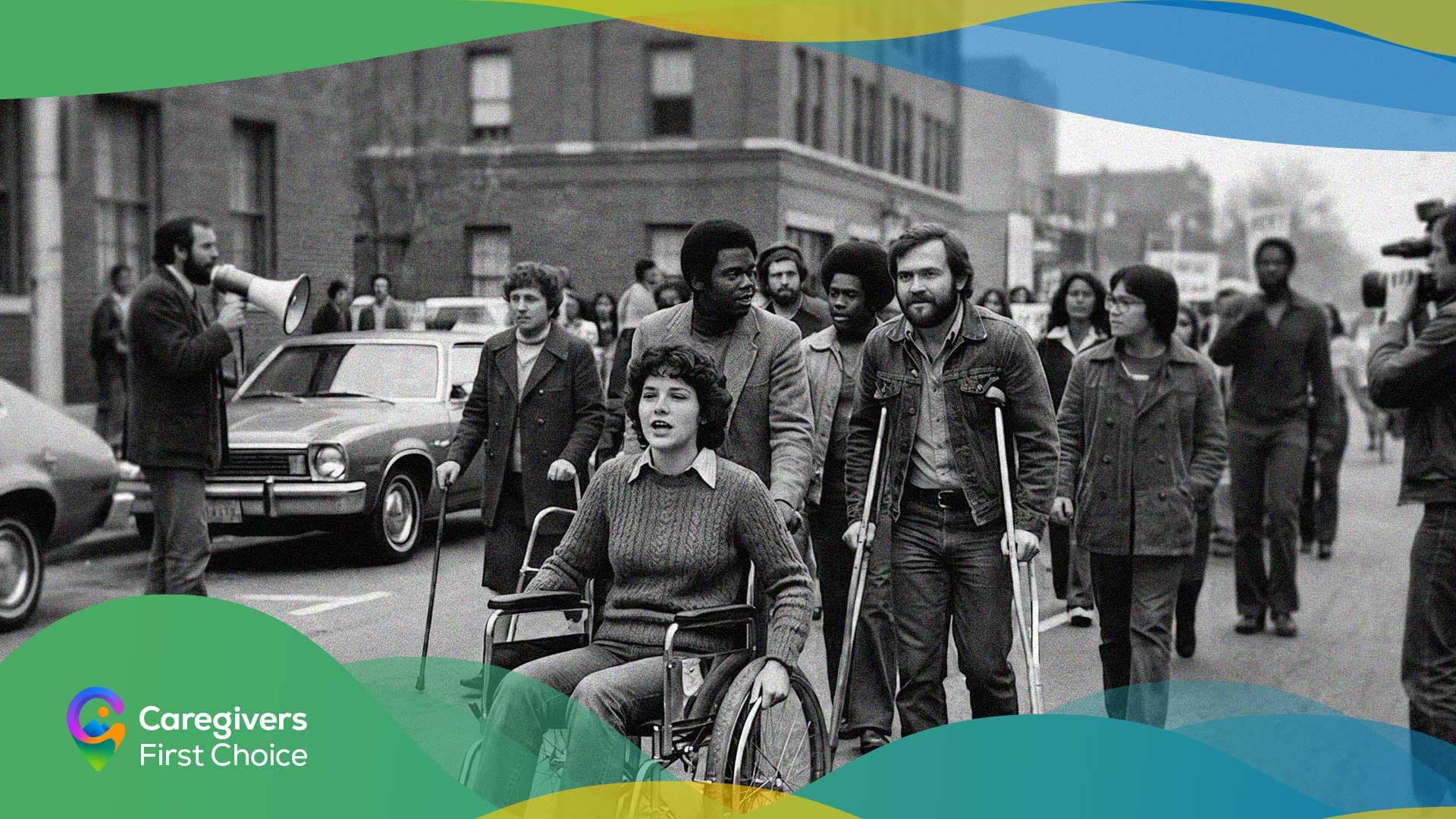
Consumer-directed care did not begin in a health policy office. It came out of the independent living and disability rights movements of the 1960s and 70s, built on a claim that sounded radical at the time and obvious now: the person who lives with a disability is the authority on their own care. Not the institution. Not the agency. The person. That authority included the most basic decision of all, which is who comes into your home and puts their hands on your body to help you live your day.
That principle moved into Medicaid slowly. In the 1990s and 2000s, the Cash and Counseling demonstrations in Arkansas, New Jersey, and Florida tested whether ordinary people could manage their own care budgets and hire their own workers. They could, and the results were good enough that Congress wrote self-direction into permanent Medicaid authority. Today that authority lives in several places in federal law, including Section 1915(k) of the Social Security Act, the Community First Choice option that Colorado adopted and now delivers through Consumer-Directed Attendant Support Services (CDASS) and In-Home Support Service (IHSS).
The name of the Colorado program is not decorative. It is Consumer Directed Attendant Support Services. The word "consumer" comes first on purpose.
The principle that holds the whole thing up
Federal rules give this principle a name: the participant directs their own services, and the planning process, in the language of the regulation, is driven by the individual. The member recruits, trains, schedules, and supervises their own attendants. The federal person-centered planning rule requires the plan to offer the member choices about the services they receive and, in its exact words, "from whom." See 42 CFR 441.540(a)(6).
Colorado's own program materials say the same thing in plain language. The Department describes CDASS as a way for members to manage their own care, with more choice and control, and tells members they are empowered to hire, train, and manage attendants of their choice. Community First Choice, on the Department's own page, is built to let members select and dismiss their attendants and to give them greater choice and control over how they receive services.
This principle does not depend on the member being the legal employer. Colorado offers two ways to direct your own care under Community First Choice. In Consumer Directed Attendant Support Services (CDASS), the member is the employer and manages the budget directly. In In-Home Support Services (IHSS), a provider agency carries the employer duties, the payroll, the taxes, the compliance, while the member still selects, schedules, and trains the attendant. The Department describes both as ways to self-direct. The difference is who signs the paychecks. The constant, in either model, is that the member chooses who provides the care. A cap on that chosen caregiver lands the same way in both, because in both the choice was the member's to make.
Choice of caregiver, in other words, is not a feature bolted onto the model. It is the foundation the model is poured on top of. Everything else, the budget, the timesheets, the training, is plumbing built on top of that one idea.
Which is what makes a cap on the chosen caregiver a different kind of limit than it first appears.
Two limits that are not the same limit
Medicaid limits things all the time, and most of those limits are uncontroversial. A cap on how many hours of care a person receives is a medical-necessity decision. The state assesses need, the state authorizes hours, and the state may reasonably decide that a person needs forty hours rather than sixty. Reasonable people can argue about the number, but no one argues that the state lacks the authority to set it. That is a limit on the amount of care.
A cap on how many hours a specific chosen caregiver may be paid is a different animal entirely. It does not reduce the care the state has already authorized. The need is unchanged. The hours are unchanged. What changes is who is allowed to deliver them. The state has assessed the need at, say, seventy hours, and the member has chosen one person to meet it, and the cap says that person may cover only part of it. The rest must come from someone else.
That is not a limit on the amount of care. It is a limit on consumer direction itself.
The state's case, stated fairly
There are real reasons behind the cap, and they deserve to be put at their strongest rather than waved away.
- The first is cost. When the federal home care overtime rule took effect, agencies across the country watched overtime exposure climb, because a single caregiver working long weeks earns a premium on every hour past forty. A per-caregiver cap is one way to contain that premium.
- The second is worker protection. A caregiver working very long weeks with no day off is a fatigue risk and, the argument goes, a quality-of-care risk. Labor advocates support hour limits for exactly this reason, and they are not wrong to care about it.
- The third is the tidy answer to everything above: the cap does not stop you from choosing your caregiver. You may still choose that person. The state simply will not pay them past the cap. Hire a second worker for the remaining hours, and the problem solves itself.
That is the case. It is coherent, and on a spreadsheet it makes perfect sense.
Why it does not make sense in the homes that matter most
The second worker is a fiction for the families this rule hits hardest. They did not arrive at a single caregiver by accident. They arrived there because no acceptable outside provider existed, which is the entire reason they entered consumer direction in the first place. Telling them to hire a stranger for the uncovered hours is telling them to solve, on a deadline, the exact problem the program was designed to let them solve their own way.
The worker-protection rationale has a problem of its own. The Department calls the cap, in its own words, first and foremost a safety and quality measure meant to prevent burnout. Yet the rule applies the limit per member, and it deliberately preserves the higher caps for a caregiver who serves more than one member. A single caregiver may be paid well past fifty-six hours in total, as long as the hours are split across members. If a long caregiver week were the hazard, the state would not write its own rule to permit exactly that. Read against its own structure, the cap is not a fatigue rule. It is utilization control applied one member at a time, wearing a safety costume.
There is a further irony in calling the cap a safety measure. The agency-supported model, in which a provider agency employs the attendant and handles scheduling, supervision, training, and backup recruitment, is the structure built to watch for and relieve caregiver strain. Where burnout is a real risk, that infrastructure is the surgical tool for it. A flat per-member cap is the opposite of surgical. It treats every long week as identical, the rural sole caregiver and the overextended one alike, and it removes pay rather than adding support.
Then there is the federal rule the cap runs into. Under 42 CFR 441.540(b)(5), natural supports cannot supplant needed paid services unless those supports are provided voluntarily, in lieu of a paid attendant. Picture what the cap does in a sole-caregiver home. The hours above the cap do not vanish, because the need does not vanish. They get provided anyway, unpaid, by the same family member, because the alternative is a vulnerable person going without care. That is unpaid family labor supplanting needed paid services, which is the precise thing the federal rule guards against. And the word "voluntarily" carries no weight when the only other option is harm to someone you love.
Strip away the framing and what remains is a contradiction the state has not resolved. The state certifies that the person needs the hours. The state then caps the only available caregiver below that need. And the state funds no bridge to anyone else. Two official determinations, the assessment and the cap, that do not reconcile, with the gap handed to the family least equipped to absorb it.
The cut that does not look like a cut
HCPF has been clear that no one will lose authorized hours. The Department says members will not experience cuts to their service hours or budgets as a result of the caregiver limits. Take that promise at face value, and notice what it rests on. It rests on the exception process working, smoothly, every time a member's assessed need runs past the cap.
It will not, and the reason has a name. Administrative burden, what Cass Sunstein calls sludge, is the friction a system places between a person and what they are entitled to. Forms, documentation, supervisor sign-offs, state reviews. Colorado's case managers already carry heavy caseloads. When one path is low-friction and another is high-friction, a loaded system drifts toward the low-friction path, not from bad faith but from exhaustion. It is one of the oldest findings in the study of frontline public work. Under pressure, the path of least resistance becomes the policy.
Colorado has already seen a version of this. Case managers have leaned on personal care hours rather than authorize health maintenance activities, because personal care clears a lower documentation bar than the clinical task categorization and supporting documentaion needs that health maintenance activities require. The easier authorization wins over the more accurate one.
Now apply it to the cap. Authorizing within the cap requires nothing. Authorizing above it requires an exception, with its paperwork, its approvals, its reviews. The low-friction choice is to stay at the cap. Multiply that across thousands of cases and stretched case managers, and the outcome is a reduction in authorized care that no one ever announced. Not a cut to what members need, but a wall of paperwork between them and the hours they were assessed to require. The promise that no one loses hours, and a design that makes losing hours the path of least resistance, cannot both be true.
Where this is won or lost
None of this means a cap is unlawful. The state has authority to set service limits, and federal rules allow limits as long as the state states a basis for them. The fight is not over whether a cap can exist. It is over whether the people for whom the cap makes no sense have a real way out.
That is the exception process, and it is where the principle either survives or not. A cap paired with a genuine, accessible, member-controlled exception preserves consumer direction, because the member who has no alternative caregiver can say so and be heard. A cap paired with a bureaucratic exception, gated by the agency, burdened with proof, slow enough to outlast the family's patience, negates consumer direction while keeping its namesake.
The cap, in the end, is not betrayal. A hollow exception process is.
The promise, kept or broken
Consumer direction was never a convenience or a cost trick. It was a promise, rooted in a civil rights movement, that the person receiving care is the one who decides who provides it. States put that promise in the name of their own versions of the program and in the text of its own pages. The federal authority the state adopted is built on it.
A cap that overrides that promise for the families with the fewest options is not a refinement of the model. It is a step away from the reason the model exists. The honest path is not to pretend the cap cannot exist. It is to make sure that when it does, the people it was never meant to harm can still choose the person they trust to care for them.
That is not asking for more than the state already promised. It is asking the state to mean it.
Frequently Asked Questions
What is Colorado's 56-hour caregiver cap?
It is a limit, adopted by the Colorado Medical Services Board in June 2026, on how many hours a single paid caregiver may provide to one Medicaid member each week. It applies across In-Home Support Services (IHSS), Consumer Directed Attendant Support Services (CDASS), Personal Care, Homemaker, Health Maintenance Activities, and Long-Term Home Health.
When does the caregiver limit take effect?
It phases in over a year. The limit is 84 hours per week starting July 1, 2026, drops to 70 hours on January 1, 2027, and reaches 56 hours on July 1, 2027. A separate 16-hour daily limit also applies.
Does the cap apply to IHSS, or only to CDASS?
Both. IHSS, the agency-supported model, and CDASS, the self-directed model, are both subject to the limit, along with Personal Care, Homemaker, and Health Maintenance Activities. The model you choose does not change whether the cap applies.
Is the limit per member or total? Can one caregiver work more than 56 hours?
The limit is per member. A caregiver who serves more than one member keeps the higher caps across members, so a caregiver supporting two members may be paid for more than 56 hours in total, just not more than 56 for a single member.
Will my authorized care hours be cut?
HCPF states that members will not lose authorized service hours or budgets as a result of the caregiver limits. The limit governs how many hours one caregiver may be paid for a single member. Care above that line must be provided by an additional caregiver or covered through an approved exception.
What is consumer-directed care?
Consumer-directed care, also called self-direction, lets the Medicaid member decide how their care is delivered and who delivers it, rather than having an agency assign a worker. It grew out of the disability rights and independent living movements, and the member's authority to choose their own caregiver is its central principle.
Can I still choose my own caregiver under the cap?
Yes. In both IHSS and CDASS, the member selects the caregiver, and the cap does not remove that choice. It limits how many weekly hours your chosen caregiver may be paid for your care, which is the concern this article raises for families whose chosen caregiver is the only one available.
How do I request an exception to the 56-hour cap?
For most IHSS and Community First Choice members, your provider agency submits the request to your case manager, who must approve it before it goes to the state for a final decision. Members self-directing through CDASS, or their Authorized Representative, take that role themselves. Exceptions are considered in defined categories, such as rural areas without available caregivers, complex medical needs, or care that requires specialized skills, and short-term emergencies have their own pathway. Talk with your case manager about your specific situation.
Sources
- 42 CFR 441.540, Person-centered service plan (the plan must offer choice of services "and from whom," and natural supports cannot supplant needed paid services).
- Community First Choice, Section 1915(k) of the Social Security Act, 42 U.S.C. 1396n(k), implemented at 42 CFR Part 441, Subpart K.
- Colorado Department of Health Care Policy and Financing, Consumer-Directed Attendant Support Services.
- Colorado Department of Health Care Policy and Financing, Community First Choice Option.
- Colorado Department of Health Care Policy and Financing, Medicaid Sustainability and LTSS (the 56-hour caregiver limit, its phase-in, and the Department's statements on rationale and on authorized hours).
- Rule 8.7419, weekly caregiver limit, 10 CCR 2505-10 (approved by the Medical Services Board, June 12, 2026).
- Cash and Counseling Demonstration and Evaluation (PMC).
- Cass R. Sunstein, Sludge: What Stops Us from Getting Things Done and What to Do about It (MIT Press, 2021).
- Pamela Herd and Donald Moynihan, Administrative Burden: Policymaking by Other Means (Russell Sage Foundation, 2018).
- Michael Lipsky, Street-Level Bureaucracy: Dilemmas of the Individual in Public Services (Russell Sage Foundation, 1980).
0 Comments